Best of
Espresso vs Drip Coffee in 2027: Which Brewer Fits Your Morning?
For 2027, espresso vs drip coffee compared on pressure, batch size, milk drinks, and effort, with the best machine on each side for the drink you actually make.
The short answer
Choose espresso if you drink shots and milk drinks: the Breville Barista Express for the all-in-one start or the Gaggia Classic Pro for the hobbyist path. Choose drip if you drink pots: the Moccamaster KBGV Select for the reference brew or the OXO Brew 9-Cup for a thermal carafe and flexible batch sizes. See the best brewers by method and the best coffee maker for the full comparison.
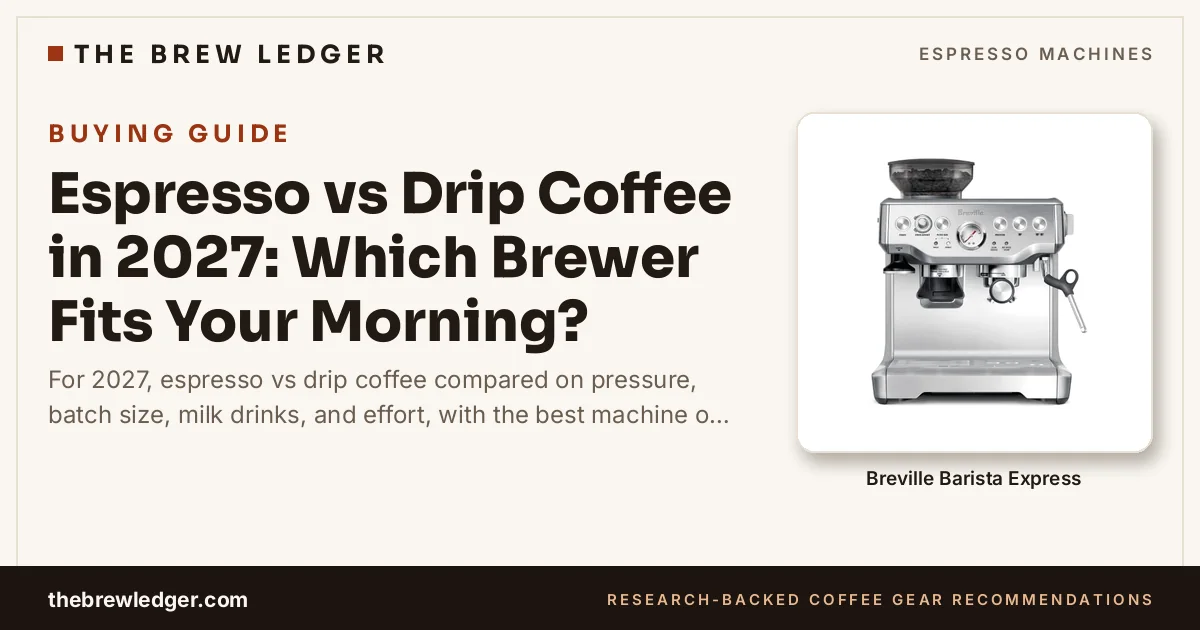
Espresso and drip are not rivals: one is intensity and milk, the other is volume and ease. Pick the side that matches the drink, then buy the best machine on that side.
Espresso vs drip at a glance
Ranked on pressure, batch size, milk, and effort
| Product | Pump | Capacity | Portafilter | Certification | Water tank |
|---|---|---|---|---|---|
| Breville Barista Express BES870XL | 15-bar Italian pump | - | 54 mm | - | 67 oz (2 L) |
| Gaggia Classic Pro RI9380 | 15-bar ULKA, factory set to 9 bar (E24) | - | 58mm stainless steel | - | 72 oz (2.1 L) |
| Technivorm Moccamaster KBGV Select | - | 10 cups / 40 oz (1.25 L) | - | SCA Certified | - |
| OXO Brew 9-Cup Coffee Maker | - | 9 cups | - | SCA Golden Cup Certified at launch (not on current list) | - |
Swipe sideways to compare all columns

01Best espresso side: all-in-one
Breville Barista Express BES870XL
- Pump: 15-bar Italian pump
- Grinder: Integrated conical burr, 16 settings
- Water tank: 67 oz (2 L)
The Barista Express is the espresso side's all-in-one answer: an integrated conical burr with 16 settings, a 15-bar pump with low-pressure pre-infusion, a 67 oz tank, and a 54 mm portafilter, with a steam wand for real microfoam. It makes the drinks drip cannot: straight shots, flat whites, and lattes with texture. The trade is effort: dosing, tamping, and steaming are manual skills, and the machine asks for them every morning. For a buyer who wants espresso and milk drinks without a separate grinder, it is the complete espresso side.

02Best espresso side: for the hobbyist
Gaggia Classic Pro RI9380
- Pump: 15-bar ULKA, factory set to 9 bar (E24)
- Portafilter: 58mm stainless steel
- Valve: 3-way solenoid
The Gaggia Classic Pro is the espresso side for buyers who want the craft: a 58 mm stainless steel portafilter on a commercial group head, a 3-way solenoid valve, a 72 oz tank, and a commercial steam wand. It rewards tuning and repays it with shots no drip brewer can approach. The trade is the single boiler: a real wait between brewing and steaming, no PID, and a standalone grinder is required. For a buyer who will learn the machine and keep it for a decade, it is the deepest espresso side.

03Best drip side: the reference brewer
Technivorm Moccamaster KBGV Select
- Capacity: 10 cups / 40 oz (1.25 L)
- Certification: SCA Certified
- Brew temperature: 196-205°F
The Moccamaster KBGV Select is the drip side's reference: SCA certified to hold 196 to 205 degrees, a copper heating element that brews a full 10-cup carafe in 4 to 6 minutes, a 9-hole spray arm that wets the grounds evenly, and a 5-year warranty. It makes the volume espresso cannot: a full pot for a household in minutes, with no skill required. The trade is simplicity: no programmable timer, no brew-strength settings, and a glass carafe on a hot plate that can cook the coffee if it sits. For a household that drinks pots, it is the drip benchmark.

04Best drip side: thermal carafe ease
OXO Brew 9-Cup Coffee Maker
- Capacity: 9 cups
- Certification: SCA Golden Cup Certified at launch (not on current list)
- Carafe: Double-wall vacuum-insulated thermal
The OXO Brew 9-Cup is the drip side for households that brew varying amounts: SCA Golden Cup certified, a double-wall vacuum-insulated thermal carafe that keeps coffee hot without a hot plate, and a dial that brews 2 to 9 cups with the water volume matched automatically. It solves the Moccamaster's two weaknesses, the hot plate and the fixed batch, in one machine. The trade is the ceiling: 9 cups maximum is smaller than 12-cup family machines, the thermal carafe needs preheating for best retention, and the taller profile needs cabinet clearance. For a household that brews different amounts on different days, it is the flexible drip side.
Questions, answered
Can drip coffee ever taste like espresso?
No, and the reason is pressure: true espresso forces water through finely ground coffee at around 9 bars, which extracts oils and colloids that create body and crema. Drip brewers, even the Moccamaster, work at no pressure at all. A moka pot reaches about 1.5 bars and gets closer, but it still cannot produce real crema. If the drink you want is a shot, you need a pump.
Is espresso stronger than drip coffee?
Per ounce, yes: a shot is far more concentrated than a mug of drip. Per serving, it depends: a 12 oz mug of drip often contains more total caffeine than a double shot, because there is simply more of it. Strength is the wrong comparison; the real difference is concentration and body, not caffeine totals.
Which side is cheaper to start on?
Drip, by a wide margin: a good drip brewer costs far less than a pump machine plus a grinder, and the Moccamaster is the premium end of drip. Espresso's entry cost is the machine plus a grinder, which is why the Barista Express exists: it bundles both. If the budget is tight and the household drinks pots, drip is the honest start.
Can one household sensibly own both?
Yes, and many do: a drip brewer for the morning pot and a pump machine for afternoon shots and milk drinks. The cost is counter space and two grinders worth of thinking, since espresso and drip want different grind settings. If space is tight, the K-Duo style hybrid or a single all-in-one machine is the compromise, not two full brewers.