How to
How to Choose a Percolator
How to choose a percolator: electric or stovetop first, then batch size, material, serving ease, and how much of the brew you want to see.
The short answer
Choose by setting first: the Farberware FCP280 for small electric batches at home, the GSI Glacier when size must match the trip, and the Presto for fast 12-cup batches for guests. Work the five steps below, then read the best coffee percolators and the percolator buying guide before buying.
Choose a percolator in five steps
Electric or stovetop: decide the setting first
Electric percolators plug in, brew on their own, and hold the batch warm: the FCP280 and Presto are kitchen-counter machines. Stovetop percolators need a burner or camp stove and give no keep-warm: the GSI Glacier is the camp and burner answer. A stovetop pot bought for a kitchen with no gas or coil hob, or an electric pot bought for a campsite with no outlet, is a purchase error, not a preference.
Match batch size to the usual group
Count the usual drinkers, not the largest party. The GSI range from 3 to 12 cups lets a solo brewer, a couple, and a basecamp each buy the right size, while the FCP280 8-cup size suits a smaller household and the Presto 12-cup suits a crowd. The Presto is 12-cup only, so it belongs with entertainers, not daily small-batch brewers. A pot brewed half full percolates unevenly, so size accuracy matters more than maximum capacity.
Choose material for durability or visibility
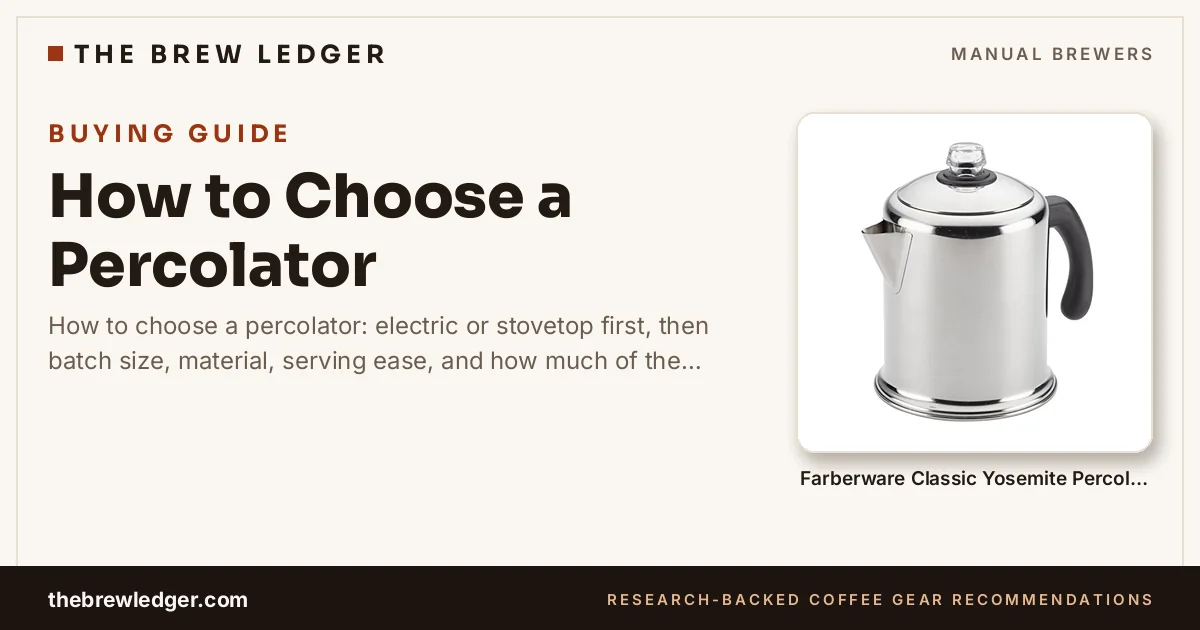
Stainless steel, like the Yosemite, Presto, and GSI bodies, survives daily use and camp abuse and keeps flavor clean. Glass, like the Medelco pot, shows the whole brew so you can time the perk by color, and the Primula shows it through a glass knob, but both demand careful handling and stay home. Steel is the durable choice, glass is the visual choice, and no pot here is both.
Check serving ease before buying
A full percolator is heavy, so serving details matter: the Cuisinart detachable cord lets the pot serve at the table, the Presto easy-pour spout reduces dribbles when serving a crowd, and the GSI clear perc view knob tells you when to pull the pot. Cool-touch or stay-cool handles, ready lights, and water windows are not extras here: they are how a heavy, hot pot gets used safely every day.
Be honest about cleanup and timing
Electric pots have multi-part stem and basket assemblies to wash, as the FCP280 record notes, while stovetop steel pots and glass pots need their own care. Timing is manual on every percolator here: no model adjusts brew strength for you, so the ready light or the visible brew color is your signal. If you will not watch the perk or wash the parts, a percolator is the wrong brewer, however good the pot.
Three percolators for three settings

For small electric batches at home
Farberware FCP280 Electric Percolator
- Type: Electric percolator
- Capacity: 8 cup
- Material: Stainless steel basket
An 8-cup electric with automatic keep-warm, a stainless steel basket, and a no-drip spout covers the small-household electric case end to end. Its 8-cup-only sizing is the honest limit, and the multi-part stem and basket need washing, but for a household that brews small batches at the counter it is the default answer.
For matching size to the trip
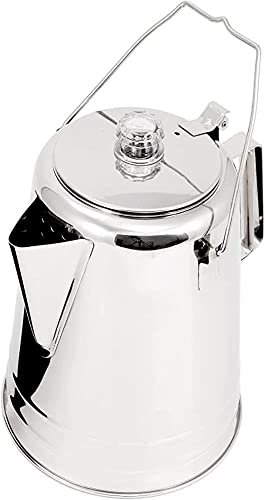
GSI Outdoors Glacier Stainless Percolator
- Type: Stovetop percolator
- Sizes: 3, 6, 9, and 12 cup
- Material: 18/8 marine-grade stainless steel
Four sizes from 3-cup solo to 12-cup basecamp in heavy-gauge stainless steel, with a clear perc view knob for watching the cycle, make this the pick when the setting changes: kitchen burner one day, camp stove the next. Larger sizes are heavy when full, but no other pot here scales across solo, couple, and group brewing.

For fast full batches for guests
Presto 12-Cup Stainless Steel Percolator
- Type: Electric percolator
- Capacity: 12 cup
- Material: Stainless steel
Twelve cups at about a cup a minute, stainless inside and out, an easy-pour spout, and a signal light suit the entertainer who needs a full pot quickly and poured cleanly. Twelve cups only means it is the wrong pick for daily small batches, and its tall profile needs cabinet clearance, but for crowd brewing speed is the deciding virtue.
Questions, answered
Is percolator coffee bitter by nature?
It can be, when the coffee percolates too long. Over-perking over-extracts, which is why visible brewers and ready lights matter: pull the pot when the color is right, not after an extra cycle. A coarse grind also helps, as covered in the best grind for a percolator.
Can one percolator serve both home and camping?
The GSI Glacier comes closest, with sizes for both and steel built for camp stoves. Electric pots cannot camp without power, and glass pots cannot handle campfires. If camping is real and regular, buy the steel stovetop pot and use it at home too, rather than buying two pots.
How many cups do I actually need?
The usual group, not the guest list. A household of two that brews daily needs an 8-cup FCP280 or a 6-cup stovetop pot, not a 12-cup entertainer model. Guests can wait for a second batch; a daily pot brewed half full tastes worse every day.
Do I need a paper filter for a percolator?
No. Percolators brew through a metal basket and stem assembly, not paper, which is why washing those parts is part of the routine. The basket keeps grounds out of the pot, and a coarse grind keeps fine sediment down.