How to
How to Dial In an Espresso Grinder in 2027: Dose, Yield, and One Click at a Time
Dial in an espresso grinder step by step: weigh the dose, time the shot, read sour against bitter, move one click, and lock the setting in a log.
The short answer
Weigh 18 g of coffee in, aim for about 36 g of espresso out in 25 to 30 seconds, and change one thing per shot. Sour and fast means grind finer; bitter and slow means grind coarser. Move one click, pull again, and write the setting down when the shot lands: the log is what makes the next morning repeatable.
Dial in a grinder in six steps
Weigh the dose, every time
Dialing in starts before the grinder, with a 0.1 g scale. Weigh 18 g of beans for a double basket, every time: scoops lie, because bean density varies by roast and origin, so the same scoop can hold very different amounts of coffee. Purge 2 to 3 g through the grinder first to clear retained grounds from yesterday, then grind the weighed dose straight into the portafilter. Without a weighed dose, every later change is guesswork, since you cannot tell whether the shot changed because of the grind or because of the amount. Our espresso grinder troubleshooting guide covers the retention and static problems that make weighing matter.
Set a baseline grind and pull a timed shot
Start in the middle of the espresso range, not at the finest setting: on the Encore ESP that means the low espresso steps, around the point where the dial still feels free. Pull the shot and time it from the moment the pump starts, watching for the first drops and the colour change. A dialed-in shot flows like warm honey and finishes in roughly 25 to 30 seconds, with about double the dose weight in the cup: 18 g in, about 36 g out. Note the time and the yield before tasting anything, since the numbers tell you which direction to move before flavour confirms it.
Read the shot: sour means finer, bitter means coarser
Time and taste agree, and together they point the way. A shot that runs fast, under 25 seconds, and tastes sour or sharp is under-extracted: water passed through too fast to pull out the sweet compounds, so grind finer. A shot that runs slow, over 30 seconds, and tastes bitter or ashy is over-extracted: too much dissolved from the grounds, so grind coarser. A shot that lands in the window but still tastes off is usually a dose or distribution problem, not a grind problem: check the basket is filled evenly and tamped flat before touching the dial. Our espresso extraction troubleshooting guide covers the same sour-and-bitter fixes when the grinder is not the cause.
Move one click and pull again
Change only the grind, by one click, and pull another shot with the same dose and the same timing. On a stepped grinder like the Encore ESP, a click or two moves the shot by a few seconds; on a stepless grinder, a small turn of the dial does the same with finer control. The stepless options in this range are the Eureka Mignon Specialita, with micrometric adjustment and 55 mm flat burrs, and Fellow's newer Opus 2, which replaced the original Opus's stepped dial and inner ring with a stepless side dial. The Timemore Chestnut C3 ESP is a fine-stepped hand grinder with 30 clicks per rotation at 23 microns per click. Resist the urge to change dose and grind together: two changes hide which one fixed the shot, and the next morning you will not know what to repeat.
Lock the setting and write it down
When a shot lands in the window and tastes right, stop adjusting and write everything down: the bean, the roast date, the dose, the grind setting, the yield, and the time. The log is the whole point of dialing in: without it, the setting drifts, the bag changes, and the routine starts over from zero. Mark a stepless dial with a small sticker or a photo, since a smooth dial has no click to return to; on a stepped grinder, note the number. A shot log also shows patterns: if the same bean needs a finer setting every week, the beans are ageing, and the log proves it.
Adjust for bean age and new bags
Beans change after roasting, and the grinder setting must follow. Fresh beans, within two weeks of roast, hold gas and flow slowly, so they usually want a slightly coarser setting; older beans flow faster and want a step finer. Humidity moves the same needle day to day. Handle drift with small grinder moves, not recipe overhauls: one click finer or coarser, same dose, same yield target. A new bag is a new dial-in, so run the routine again rather than trusting the old number, and keep the log going so the next bag starts closer to right.
Grinders to practise on

The grinder to learn dialing-in on
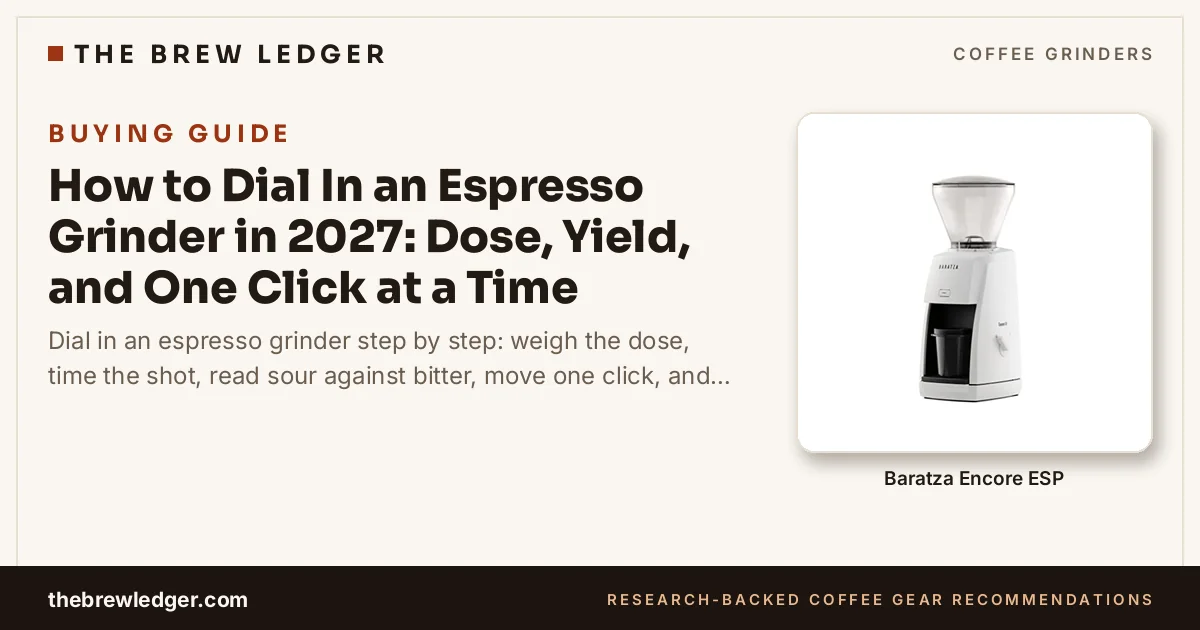
Baratza Encore ESP
- Burr type: 40 mm M2 conical steel burrs
- Grind settings: 40 stepped, dual range (1-20 espresso, 21-40 filter)
- Bean hopper: 8 oz (227 g)
The Encore ESP is the grinder to learn dialing-in on: 40 stepped settings in a dual range that concentrates the fine steps where espresso lives, so the fine end is dense enough to chase a shot by a few seconds at a time. The 40 mm M2 conical burrs are proven and replaceable, the quick-release burr set makes cleaning fast, and Baratza publishes parts and repair guides, so the grinder is maintained rather than replaced. The trade is the stepped adjustment itself: the setting can still straddle the ideal shot, and a stepless grinder lands between clicks where the ESP must choose one side or the other.

Cheapest electric start
DeLonghi KG79
- Bean hopper: 120 g
- Grind range: 16 settings, coarse to fine
- Cleaning: Removable upper burr
The KG79 is the cheapest electric way to start: a basic burr grinder with a coarse-to-fine selector, a 120 g hopper, and a removable upper burr for cleaning. It suits pressurised baskets, where the basket does the pressure work and the grind only has to be close. The trade is precision: the grind control is too coarse for real espresso in a non-pressurised basket, so dialing in on the KG79 means learning the routine, not landing a perfect shot. Treat it as the practice grinder, and move to the ESP when the basket stops being pressurised.
Simple one-touch start
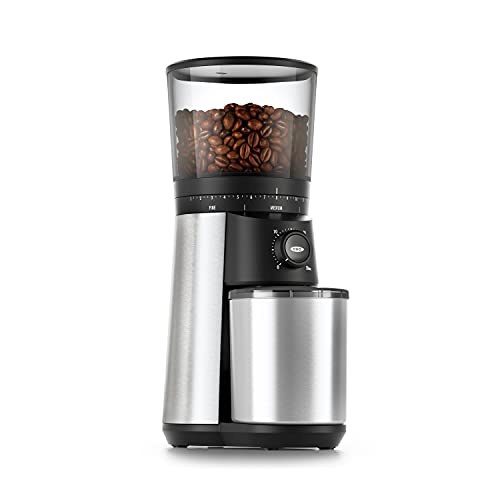
OXO Conical Burr Grinder
- Burr type: 40 mm stainless conical burrs
- Grind settings: 15 settings plus 43 micro-adjustments
- Bean hopper: 12 oz (0.75 lb)
The OXO is the simple one-touch start: 15 settings plus micro-adjustments, a 12 oz UV-blocking hopper, and a one-touch 30-second timer, in a grinder that asks nothing of the user. It suits pressurised baskets and beginners who want grinding to be one button. The trade is step size: the steps are too coarse for dialing in a non-pressurised basket, so the OXO teaches dose and timing while the grind setting stays approximate. Use it to learn the routine, then judge the shot by taste rather than by the number on the dial.

Quiet filter-first option
Capresso Infinity Plus
- Burr type: Conical steel burrs
- Grind settings: 16, extra fine to coarse
- Bean hopper: 11 oz
The Infinity Plus is the quiet option: a conical burr grinder with gear reduction and low-speed grinding, an 11 oz hopper, and a lid-and-container interlock, built for drip first and espresso second. It suits a household that brews drip daily and tries pressurised espresso occasionally, and it does that job quietly. The trade is espresso control: this is a filter grinder first, so precise dialing-in is beyond it, and the fine-tuned range still lacks the small steps a non-pressurised basket needs.
Questions, answered
How long should an espresso shot take?
Roughly 25 to 30 seconds from pump start to finish, with the right dose. Faster means grind finer; slower means grind coarser. Time the shot every time while dialing in, and taste to confirm: sour needs finer, bitter needs coarser.
What dose should I start with?
18 g of coffee for a double basket, aiming for about 36 g of espresso out: a 1-to-2 ratio by weight. Weigh the dose on a 0.1 g scale, since scoops vary by roast and origin. Keep the dose fixed while you move the grind, or you will not know which change fixed the shot.
My shot runs fast and tastes sour. What do I change?
Grind finer, one click at a time, keeping the dose the same. Sour and fast means under-extraction: water passed through too fast to pull out the sweet compounds. Pull again after each click until the shot lands in the 25 to 30 second window.
My machine chokes and nothing comes out. What now?
The grind is too fine or the basket is overdosed for the pump to push through. Grind coarser one step at a time until flow starts, or reduce the dose by a gram. If it chokes suddenly after working fine, the grinder may have drifted finer or the beans changed; recalibrate rather than forcing it.
Stepped or stepless for dialing in?
Stepless is ideal, because you can land exactly on the setting the shot needs instead of choosing between two clicks that straddle it. The Specialita and the Opus 2 are the stepless grinders in this range. Fine-stepped grinders like the Encore ESP and the Chestnut C3 ESP, at 23 microns per click, are close seconds; coarse-stepped grinders force compromises.
Do I really need a scale to dial in?
Yes: a 0.1 g scale is the cheapest tool in espresso, and without it the dose is a guess. Weigh the beans in and the espresso out, and the ratio tells you more than any timer alone. The scale also catches retention drift, since a dose that weighs light means grounds are stuck in the grinder.
Why do my shots drift day to day?
Beans age and humidity changes shift extraction daily: coffee degasses as it ages, flowing faster over the first two weeks off roast, and damp air slows the grind. Small grinder adjustments handle normal drift; a full recipe overhaul means something else changed, usually the bag.
Can I dial in a pressurised basket?
There is less to gain: a pressurised basket builds pressure itself and fakes crema with fresh or stale coffee alike, so it hides grind errors rather than revealing them. The KG79, OXO, and Capresso grinders here suit pressurised baskets, and dialing in on them means learning dose and timing; for true dialing-in, a non-pressurised basket and a grinder with fine steps, like the Encore ESP, is the honest starting point.