Review
Espro P3 Review
In-depth Espro P3 review: the double micro-filter in a glass body on cup cleanliness, heat loss, and whether it beats the Bodum presses.
- Specs from manufacturer listings
- No paid placements
- Reader-supported
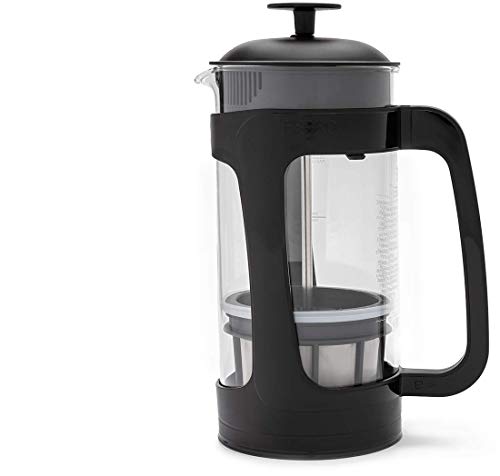
Espro's double micro-filter in a glass body for less than the vacuum-insulated P7.
- Capacity: 32 oz
- Filtration: Patented double micro-filter
- Beaker: Borosilicate glass
Our verdict
The P3 is the clever middle of the Espro range: the same patented double micro-filter as the P7, which removes far more sediment than any single mesh, in a 32 oz borosilicate glass beaker for notably less than the vacuum-insulated P7. The cup is visibly cleaner than any Bodum press, and you can watch the grounds bloom and settle through the glass. Its limits are the glass itself: it loses heat quickly, so brew and serve promptly, and the beaker can break, unlike the P7's steel body. It is still pricier than basic single-filter presses, which is the fair cost of the double filter. For a buyer who wants the cleanest glass cup without paying for vacuum insulation, it is the pick. See how it compares in our best French press picks and best glass French press rankings.
Who it is for
Brewers who want Espro's clean cup without paying for vacuum insulation.
What we like
- Same patented double micro-filter as the P7 for a low-sediment cup
- 32 oz borosilicate glass beaker lets you watch the brew
- Costs notably less than the vacuum-insulated P7
- Dishwasher safe
What to watch out for
- Glass loses heat quickly; brew and serve promptly
- Glass beaker is breakable, unlike the P7
- Still pricier than basic single-filter presses
The double filter in glass
The P3's argument is one component: the patented double micro-filter, two fine screens that catch the sediment a single mesh lets through. The result is a cup that tastes like French press, full-bodied and rich, without the silty last sip that defines cheaper presses. The glass body is the deliberate trade: it lets you watch the brew, which steel hides, and it costs notably less than the P7's vacuum-insulated steel. The filter is the upgrade; the glass is the compromise.
Capacity and the 32 oz standard
One size only, 32 oz, which is about four mugs or two large ones. That is the right size for most households, but a solo drinker brews it half full and an entertainer brews twice. Espro's choice is deliberate: one size keeps the filter geometry exact, and the P7 shares the same 32 oz capacity. If you need 51 oz, the Bodum Columbia is the steel answer; if you need 12 oz, the Bodum Brazil is the glass one.
Heat loss: the honest trade-off
Glass loses heat within minutes, and the P3 is no exception: the coffee is ideal right after plunging and cools steadily after that. There is no vacuum insulation to save the second cup, so the P3 is a brew-and-serve press, not a keep-warm one. Preheat the beaker with hot water to buy a few extra minutes, and pour everything out immediately after plunging, since coffee left sitting on the grounds keeps extracting and turns bitter.
How it stacks up
Against the Espro P7 (32 oz, same double micro-filter, vacuum-insulated stainless steel), the P3 brews the same clean cup for less, but loses heat fast and can break; choose the P7 when the second cup must stay hot and the press must survive a drop. Against the Bodum Chambord (12, 17, 34, and 51 oz, single 3-part filter, chrome frame), the P3 costs more but leaves far less sediment and needs no size decision; choose the Chambord for the classic look and the size range. Against the Bodum Brazil (12, 34, and 51 oz, same single filter in a plastic frame), the P3 is the cleaner cup at a higher price, and the trade is purely filtration against cost.
Size, materials, and filters
- Capacity
- 32 oz
- Filtration
- Patented double micro-filter
- Beaker
- Borosilicate glass
- Care
- Dishwasher safe
- Position
- Glass-bodied Espro press
Sources: Espro official product specifications, Major retailer product listings, Published coffee gear reviews
What to expect day to day
Our notes on living with the Espro P3, drawn from its documented strengths and limitations. These are editorial expectations, not owner reviews or survey results.
Where it makes life easier
- It gets the flagship's double micro-filter in a more affordable glass body
- The 32 oz borosilicate beaker lets you watch the grounds bloom and settle
- Cleanup is simple because the press can go straight into the dishwasher
What to plan around
- The glass does not hold heat long, so pour soon after plunging
- The beaker carries the usual breakage risk that the steel version avoids
- It still costs more than ordinary single-filter presses
Also consider

Espro P7
The double-filtered, vacuum-insulated press that brews the cleanest French press cup.
- Capacity: 32 oz (1 liter)
- Filtration: Patented double micro-filter
Sources: Espro official product specifications, Major retailer product listings, Published coffee gear reviews
Check current price
Bodum Chambord
The chrome-and-glass French press design that has defined the category since the 1950s.
- Design: Iconic French press, dating to the 1950s
- Beaker: Borosilicate glass
Sources: Bodum official product specifications, Major retailer product listings, Published coffee gear reviews
Check current priceQuestions, answered
Is the P3 worth the extra cost over a Bodum?
Yes if sediment bothers you: the double micro-filter removes far more of it than the Bodum single mesh, and that difference shows in every last sip. If you do not mind a little grit, or if you always pour through a strainer, the Bodum Brazil brews the same strength of coffee for less.
Does the double filter make cleaning harder?
Only slightly: both screens need a rinse, and grounds can lodge between them. The press is dishwasher safe, which covers the daily wash, but a quick rinse of the filter assembly after each brew keeps it free of stale grounds. It is one extra rinse, not a chore.
Can the glass beaker be replaced if it breaks?
Yes, through Espro: replacement beakers are available, and the double-filter assembly, which is the expensive part, survives a beaker break. That is worth knowing before buying glass, since the filter is what you are really paying for.
P3 or P7: which Espro should I buy?
Buy the P3 if you want the clean cup and do not mind serving promptly, or if you like watching the brew through glass. Buy the P7 if the second cup must stay hot, or if the press will travel or live with children. The cup is the same; the body decides.