How to
How to Choose a French Press
How to choose a French press: glass or steel, single or double filter, size, and heat retention, with the press to buy for each answer.
The short answer
Choose glass with the Bodum Chambord for the classic cup, steel with the Frieling for durability, and the Espro P7 when you want the cleanest cup that stays hot. The five steps below settle material, filter, size, and heat retention before you compare prices.
Step by step
Decide glass or steel first
Glass shows the brew and costs less, but it breaks and loses heat fast. Steel costs more, hides the brew, and survives drops while holding heat far longer. If the press lives on a careful kitchen counter, glass is fine; if it travels, camps, or shares a house with children, steel pays for itself the first time it does not shatter.
Pick the filter: single or double
A standard mesh filter leaves some fine sediment, which many drinkers accept as part of French press character. Espro's double micro-filter removes far more of it, at a higher price and with slightly more careful cleaning. If grit in the last sip bothers you, the filter decision matters more than any other feature on the box.
Size for the largest regular batch
French press coffee stales in the press as grounds keep extracting, so size for the batch you actually brew, not the biggest you might brew. A press that is too large brews thin, under-dosed coffee on ordinary days; a press that is too small forces a second brew on guest days, which is the lesser problem.
Weigh heat retention honestly
Glass loses heat within minutes, so a second cup from a glass press is a cooler, duller cup. Vacuum-insulated steel, in the Bodum Columbia and Espro P7, keeps a full pot hot well past the first cup, but check the maker's rating rather than the word vacuum: Espro rates the P7 at over an hour, while the Stanley Classic is rated to 4 hours. If your household drinks one fast round, retention hardly matters; if mornings stretch, it decides the purchase.
Check cleaning before buying
French press cleanup is the chore that kills the habit: grounds to scrape, a filter to rinse, and a beaker to wash. Double filters add a rinse step but save a sludge problem; steel bodies hide stains but need the same rinse. Pick the press whose cleanup you will actually do daily, and read the French press fixes when a brew goes wrong.
Presses for each answer

For the classic glass press
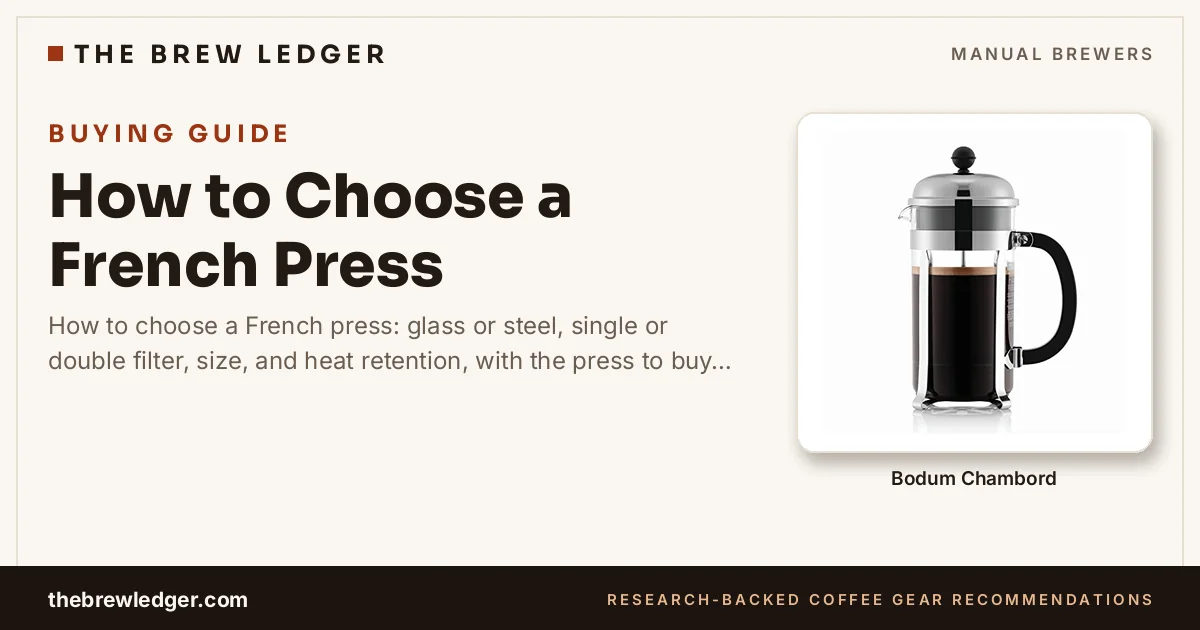
Bodum Chambord
- Design: Iconic French press, dating to the 1950s
- Beaker: Borosilicate glass
- Filter: 3-part stainless steel
The chrome-and-glass design that has defined the category since the 1950s, with a rich, full-bodied cup. The default answer when looks and tradition matter and breakage is an accepted, replaceable cost.

For the cleanest cup
Espro P7
- Capacity: 32 oz (1 liter)
- Filtration: Patented double micro-filter
- Body: Double-wall vacuum-insulated stainless steel
A double-filtered, vacuum-insulated press that brews the cleanest French press cup and keeps it hot. The default answer when sludge in the last sip is the complaint that started the search.

For buying once
Frieling Double-Walled French Press
- Capacity: 36 oz
- Construction: 18/8 stainless steel, double-walled
- Finish: Mirror-polished exterior
All-steel, double-walled construction built to outlive glass rivals, with serious heat retention. The default answer when the press will travel, get knocked about, or be bought once and kept for years.
Questions, answered
Is a more expensive French press worth it?
For the filter and the insulation, yes: a double micro-filter and vacuum insulation change the cup and the morning. For the frame and the finish, no: a budget Bodum brews the same coffee as a pretty one, and the money is better spent on a grinder.
How coarse should French press grounds be?
Coarse, like breadcrumbs. Fine grounds slip through the mesh, over-extract during the four-minute steep, and turn the last sip to sludge. See the best coarse ground coffee for French press if you do not grind at home.
Glass or steel for a first press?
Glass, unless breakage is a real risk: it is cheaper, and a first press should teach you whether you love the method before you invest in steel. If you already know you love French press coffee, skip glass and buy the steel press once.
Why does my French press coffee taste bitter?
Usually grind or time: grounds too fine, a steep past four minutes, or water that was boiling rather than just off the boil. Change one variable at a time, starting with a coarser grind, and the bitterness usually clears without a new press.