How to
How to Choose a Pour Over Coffee Maker
How to choose a pour over coffee maker: cone, flat-bottom, or wedge dripper, plus the kettle and grind that make the dripper work.
The short answer
Buy the Kalita Wave for forgiving cups, the Hario V60 for maximum control, the OXO set to skip technique at first, and the COSORI gooseneck kettle to pour properly on a budget. The dripper choice matters less than the kettle and the grind: settle those two first, using the steps below.
Step by step
Pick the dripper shape for your skill level
Cone drippers like the V60 reward precise pouring and punish sloppy pouring; flat-bottom drippers like the Kalita forgive it; wedge drippers like the Melitta sit between the two and cost almost nothing. Beginners should start flat or wedge and move to a cone only when pouring feels automatic, not aspirational.
Buy the kettle before the second dripper
A gooseneck kettle is not an accessory: its narrow spout is what makes a slow, spiral pour possible, and a regular kettle cannot imitate it. A budget variable-temperature kettle like the COSORI covers temperature and control in one purchase, and it improves every dripper you already own more than a second dripper would.
Fix the grind, then judge the dripper
Pour over needs a medium-fine, even grind; a blade grinder or a stale pre-ground bag will make every dripper taste muddy or sour, and no dripper swap fixes that. Judge a new dripper only after the grind is right, or you will blame the cheapest part of the setup for the most expensive problem.
Choose filters and material deliberately
Paper filters give a clean cup and need rinsing to remove paper taste; ceramic drippers hold heat well but break; plastic drippers are cheap, light, and surprisingly good at holding temperature. Match the material to where you brew: ceramic at home, plastic for travel, and paper filters sized to the dripper, never improvised.
Start with one recipe and change one variable
Pick a simple recipe, dose, grind, and pour pattern, and change only one variable when a cup disappoints: grind first, then dose, then water temperature. Pour over rewards this discipline faster than any other method, and it is how a beginner's Kalita cup catches up with an expert's V60 cup.
Gear for each skill level

For maximum control
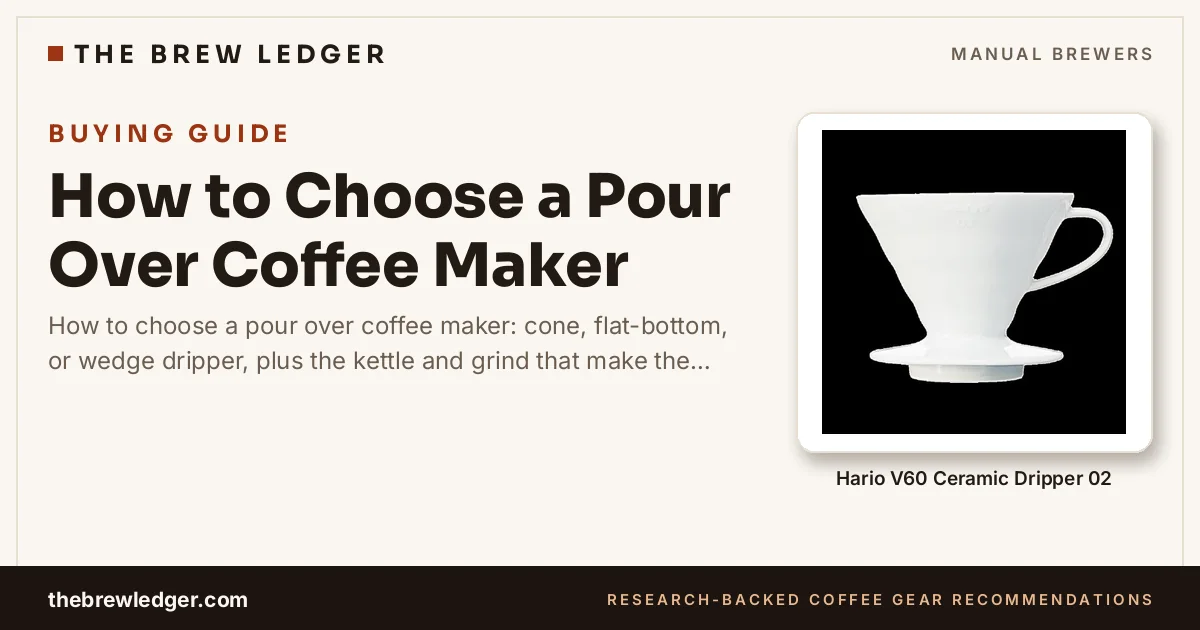
Hario V60 Ceramic Dripper 02
- Dripper shape: Cone with spiral ribs
- Drip hole: Single large hole
- Size: 02 (1 to 4 cups)
The cone dripper that defined pour over: fast drawdown and total control for brewers willing to practice pouring technique. The default answer when control is the point and a learning curve is acceptable.

For forgiving brewing
Kalita Wave 185 Stainless Dripper
- Dripper shape: Flat bottom
- Drip holes: Three small holes
- Size: 185 (1 to 4 cups)
The flat-bottom dripper whose three-hole drawdown resists channeling, so inconsistent pours still make good cups. The default answer for beginners and for mornings when technique is not the priority.

For learning without technique
OXO Brew Pour-Over Coffee Maker Set
- System: Auto-drip water tank plus dripper
- Dripper: #2 cone dripper
- Carafe: Borosilicate glass carafe
A set whose water tank regulates the pour for you, giving pour over flavor before you learn pour technique. The default answer when you want the drink first and the skill second.

For a budget precision kettle
COSORI Electric Gooseneck Kettle
- Capacity: 0.8 liters
- Power: 1200 watts
- Temperature: 5 preset temperatures
Variable-temperature presets and a hold mode for much less than the premium kettles, with the gooseneck spout that makes a slow, controlled pour possible at all. The default kettle answer when the budget has already gone on beans and a grinder.
Questions, answered
Is pour over better than drip coffee?
For one or two careful cups, yes: fresher, more control, and no stale pot. For a household pot at breakfast, no: drip wins on volume, consistency, and effort. The methods serve different mornings, and many households keep both.
Do I need a gooseneck kettle for pour over?
Yes, in practice. A slow, controlled pour is the technique itself, and a regular spout cannot deliver it. A budget gooseneck kettle like the COSORI pick above is the single purchase that most improves a beginner's pour over.
Cone or flat-bottom dripper for a beginner?
Flat-bottom: the Kalita Wave forgives uneven pouring, while a cone dripper channels and tastes thin until technique improves. Start flat, learn the recipe, and move to a cone when pouring feels boring rather than hard.
Why does my pour over taste sour?
Usually under-extraction: grind too coarse, water too cool, or a pour that rushed past the grounds. Grind a little finer, check water temperature, and slow the pour before blaming the beans or the dripper.