Best of
The Best French Press for Beginners in 2027
French presses for beginners, ranked for 2027 on forgiveness, price, and the filter, for first-time buyers who want a good first pot without paying for steel.
The short answer
For a first French press, buy the Bodum Brazil for the cheapest honest start, the Bodum Chambord for the classic chrome-and-glass press, or the Espro P3 for the cleanest cup with a double micro-filter. See the best French press picks and the best glass French press for the full field, and how to choose a French press before you decide on size.
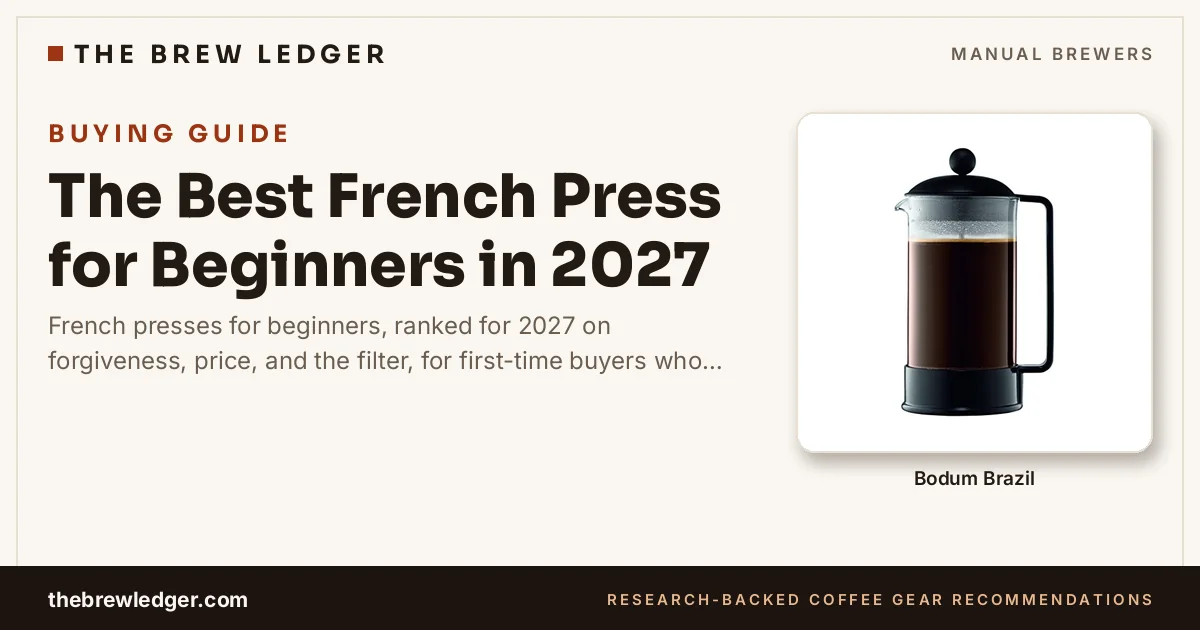
A first French press should be cheap, forgiving, and easy to replace if it breaks. These three are all glass, all honest about sediment, and they split on the filter.
French presses for beginners at a glance
Ranked on forgiveness, price, and the filter
| Product | Beaker | Filter | Sizes | Care | Position |
|---|---|---|---|---|---|
| Bodum Brazil | Borosilicate glass | 3-part stainless steel | 12, 34, and 51 oz | - | Bodum's entry-level French press |
| Bodum Chambord | Borosilicate glass | 3-part stainless steel | 12, 17, 34, and 51 oz | Glass beaker is dishwasher safe | - |
| Espro P3 | Borosilicate glass | - | - | Dishwasher safe | Glass-bodied Espro press |
Swipe sideways to compare all columns

01Cheapest honest start
Bodum Brazil
- Beaker: Borosilicate glass
- Frame: BPA-free plastic
- Filter: 3-part stainless steel
The Brazil is the cheapest honest way to learn French press: the same borosilicate glass beaker and 3-part stainless steel filter as the Chambord, in a BPA-free plastic frame, in 12, 34, and 51 oz sizes. The coffee is identical to the Chambord's, because the brewing parts are identical; the savings come entirely from the frame, which stays cool to touch even with a full pot of hot coffee. The trade is looks and longevity: plastic feels cheaper than chrome and can stain or hold odors after years of heavy use, and the heat and sediment limits are the same as any glass press. For a first press or a tight budget, it is the same brew for the lowest price.

02The classic first press
Bodum Chambord
- Design: Iconic French press, dating to the 1950s
- Beaker: Borosilicate glass
- Filter: 3-part stainless steel
The Chambord is the reference first press: a borosilicate beaker, a 3-part stainless steel filter, and a chrome frame in 12, 17, 34, and 51 oz sizes, a design that has defined the category since the 1950s. It brews the classic full-bodied cup and looks like the press everyone pictures, and replacement beakers are sold in every size, so a break is a repair, not a replacement. The trade is the category's trade: glass cools quickly, the beaker can break, and the single mesh leaves fine sediment in the last sip. For a buyer who wants the iconic press and accepts its limits, it is the default first buy.
03Cleanest first cup
Espro P3
- Capacity: 32 oz
- Filtration: Patented double micro-filter
- Beaker: Borosilicate glass
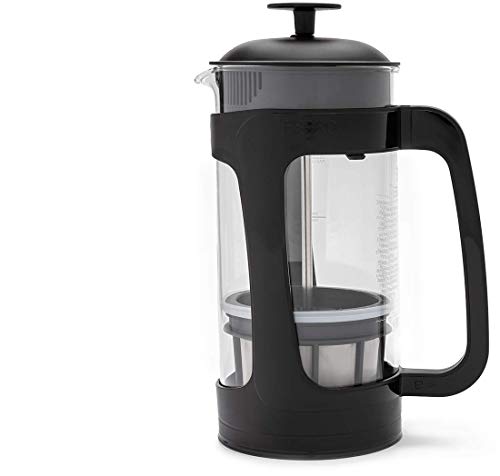
The Espro P3 is the first press for drinkers who love the method but hate the grit: the same patented double micro-filter as the P7 in a 32 oz borosilicate glass beaker, dishwasher safe, for notably less than the vacuum-insulated P7. It is the only glass press here that fixes the sediment problem instead of accepting it, and you can watch the grounds bloom and settle through the glass. The trade is heat and fragility: glass still cools fast, so brew and serve promptly, and the beaker can still break, unlike the P7's steel body. For a beginner who wants the cleanest glass cup without paying for vacuum insulation, it is the pick.
Questions, answered
What size French press should a beginner buy?
34 oz for most households: about four mugs, or two large ones. The 12 oz suits a solo drinker and the 51 oz suits entertaining, but a press brews best near-full, so buy for the usual batch, not the largest possible one. The Chambord and Brazil both come in 12, 34, and 51 oz; the P3 is 32 oz only, which is the same household size.
How coarse should I grind for a French press?
Coarse, like coarse sea salt or breadcrumbs: the four-minute steep needs big particles, or the cup over-extracts and turns bitter. A blade grinder cannot do this evenly, so a burr grinder matters more for French press than for almost any other method. If the coffee tastes muddy, the grind is too fine; if it tastes thin and sour, the grind is too coarse or the steep was too short.
Why is my French press coffee gritty?
The single mesh filter leaves fine sediment, which is normal for a standard press. Use a coarse grind, steep four minutes, plunge slowly, and pour everything out immediately. If grit still bothers you, the Espro P3's double micro-filter is the upgrade that fixes it, and the P7 does the same in steel.
Glass or steel for a first French press?
Glass, unless breakage is a real risk: it is cheaper, and a first press should teach you whether you love the method before you invest in steel. The Brazil is the cheapest honest start, and the Chambord is the classic one. If you already know you love French press coffee, skip glass and buy the steel press once, as our how to choose a French press guide explains.